

Web Design · 33 min read
Cortez's working waterfront is a story your website should be telling
Cortez is one of Florida's last authentic fishing villages. If you run a seafood market, charter, or restaurant there, heritage and authenticity are marketing gold - but only if your website actually tells the story.
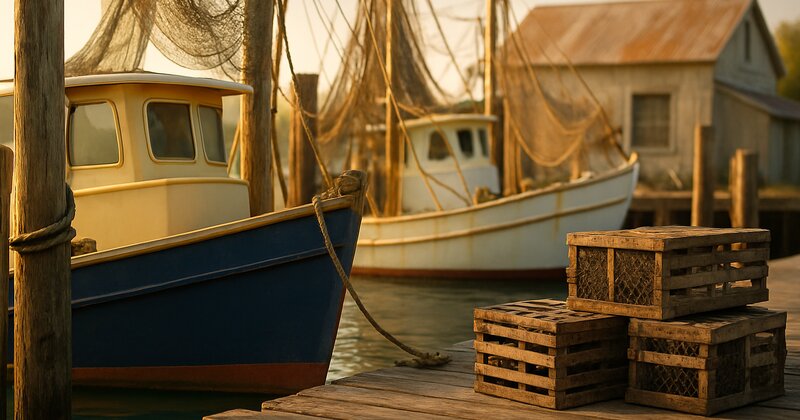
How a Cortez seafood market could triple online orders by adding three paragraphs about mullet fishing and net-mending
This is a hypothetical example: the market, the family and the numbers below are a composite for illustration, not a real business. Picture a Cortez seafood market that has been on the waterfront since 1967. Three generations. Same family. Fresh catch daily. Wholesale and retail. Local institution.
Their website in 2023: generic stock photos of shrimp and fish fillets, a price list, hours, and a Google Maps embed. Homepage headline: "Fresh Seafood Market - Cortez, Florida."
Nothing about the village. Nothing about the boats. Nothing about the 140-year fishing tradition. Nothing about why Cortez matters.
The owner's daughter took over marketing in early 2024. She rewrote the homepage.
New opening paragraphs:
"Cortez Village Seafood Market has been on this waterfront since 1967. My grandfather built this dock. My father ran the wholesale business. I grew up learning to pick crab meat at this same stainless steel table.
We're one of the last working waterfronts in Florida. When you buy fish from us, it came off a Cortez boat this morning. The shrimp boat you see tied up out back? That's the Miss Caroline - my uncle's boat. Been fishing Sarasota Bay and the Gulf for 40 years. The grouper in our case was caught on a long-line boat that left at 4am from right here in Cortez. This isn't a seafood store that orders from a distributor. This is a fishing village, and we're part of the fleet.
Cortez has been a commercial fishing village since the 1880s. Mullet fishermen from North Carolina settled here and built Florida's first fish houses. We're one of the few left. When you visit our market, you're not just buying seafood - you're keeping a 140-year tradition alive."
She added photos:
- The Miss Caroline tied up at their dock at sunrise
- Her father and uncle mending nets in front of the market
- A weathered wooden sign reading "Cortez - A Fishing Village"
- Mullet boats heading out at dawn past the Cortez bridge
- The market's vintage ice house (built 1940s, still in use)
She added a "Our Story" page:
800 words about the family's history in Cortez and the village's fishing heritage. It covered why Cortez survived when other Florida fishing villages disappeared (zoning protections, community resistance to development, third-generation fishermen who refused to sell), and what makes Cortez seafood different (day-boat fresh, caught by people you can meet, part of a tradition instead of an industrial supply chain).
Results over 10 months, in this example:
- Online orders (for tourists and seasonal residents who wanted Cortez seafood shipped to them up north) increased from ~8/month to 27/month
- Average order value increased from $65 to $94 (customers were buying more because they felt connected to the story)
- Walk-in traffic increased 30% (the website drove more people to visit in person)
- She started getting inquiries from food writers, travel bloggers, and Florida tourism sites asking to feature the market
Most surprising result:
Picture customers telling you they chose your market over others in Bradenton or Sarasota because of the Cortez story. A couple from Lakewood Ranch might put it this way: "We drove past three other seafood markets to come here because your website made us want to see the real fishing village. We've been coming back every two weeks since."
What the owner's daughter might say: "I thought the fish sold themselves. Fresh fish is fresh fish, right? Wrong. There are 10 seafood markets within 15 minutes of Cortez. Half of them buy from the same boats we do. The difference is we're actually IN Cortez, on the working waterfront, part of the village. Once we started telling that story on the website, people got it. They wanted to be part of it. They wanted the Cortez experience, not just a pound of grouper. I should have rewritten the website three years ago."
Why Cortez is different from every other Sarasota-area waterfront (and why it matters for your business)
Cortez is a commercial fishing village on the southern edge of Bradenton, between Bradenton Beach and Palma Sola Bay. Population maybe 4,000. It's been a working waterfront since the 1880s.
What makes Cortez unique in Florida (and especially rare in the Sarasota-Bradenton area):
1. It's one of Florida's last authentic fishing villages
Most Florida "fishing villages" are tourist attractions now. Tarpon Springs has sponge docks and Greek restaurants, but it's a shopping district. Destin has a harbor, but it's mostly charters and condo towers. Apalachicola still has oystermen, but tourism dominates the economy.
Cortez is still a real working waterfront:
- Commercial fishing boats (mullet netters, shrimp trawlers, stone crab trappers, grouper long-liners) operate daily from Cortez docks
- Fish houses buy and process local catch
- Net-mending, boat repair, and marine supply businesses serve the fleet
- Multi-generation fishing families still live and work in the village
It's not a museum or a theme park. It's a functioning commercial fishing community that happens to also have seafood markets, restaurants, and charters catering to tourists and locals.
Why this matters for your website:
If you run a business in Cortez (seafood market, charter fishing, waterfront restaurant, maritime shop), authenticity is your differentiator. You're not a corporate seafood chain. You're not a marina that caters to yachts. You're part of a 140-year fishing tradition.
That story is marketing gold - but only if you tell it.
2. Cortez has resisted development (and survived because of it)
Most Florida waterfronts got developed. Fishing villages turned into condo towers, retail districts, or marinas full of leisure boats. The working waterfront disappeared.
Cortez fought back:
- In the 1990s-2000s, developers tried to buy up Cortez waterfront property and build condos
- The community organized and lobbied for historic preservation and zoning protections, which blocked most large-scale development
- Manatee County designated Cortez a "Commercial Fishing Waterfront" with zoning that prioritizes maritime uses over residential or retail development
- The village is now on the National Register of Historic Places
Result: Cortez looks more like 1950s Florida than 2025 Florida. Weathered wood docks. Tin-roof fish houses. Nets drying in the sun. Mullet boats and stone crab traps stacked on the docks. No high-rises.
Why this matters for your website:
Your Cortez location isn't just an address. It's proof you're part of something rare and authentic. Tourists and locals alike are searching for "real Florida" - the Florida that existed before every waterfront became a Starbucks and a parking garage.
If your website doesn't mention Cortez's history, preservation, and authenticity, you're leaving money on the table.
3. Cortez has a tight-knit community (and customers want to feel part of it)
Cortez isn't just a place where fishing businesses happen to be located. It's a community. Families have fished together for generations. Everyone knows everyone. The Cortez Fishing Festival (held annually) draws thousands of people who want to see net-throwing competitions, eat mullet, and celebrate the village's heritage.
Customers - especially tourists, seasonal residents, and Sarasota-Bradenton locals looking for authenticity - want to feel connected to that community.
When your website tells the Cortez story, you're not just selling seafood or a charter trip. You're inviting people into the village. You're making them part of the tradition.
Example:
Generic seafood market website:
"Fresh seafood daily. Shrimp, grouper, snapper, stone crab. Open 7 days a week. Visit us in Cortez, Florida."
Why it's weak: Could be any seafood market anywhere. No story. No differentiation.
Cortez-story-driven website:
"We're a family-owned seafood market on Cortez's working waterfront, where commercial fishing boats tie up every morning and unload the day's catch. The grouper in our cooler was caught on a Cortez long-liner this morning. The shrimp came off the Miss Judy - a boat you'll see tied up at our dock. We've been here since 1967, back when Cortez was nothing but fish houses and net sheds. It still is. This is one of Florida's last real fishing villages, and when you buy from us, you're supporting the boats, the families, and the 140-year tradition that keeps Cortez alive."
Why it works:
- Specific details (the Miss Judy, 1967, long-liners, 140 years)
- Emotional connection (you're supporting the tradition)
- Differentiation (last real fishing villages, working waterfront)
- Sense of place (Cortez is a character in the story, not just a location)
We covered similar storytelling principles in our guide on real photos vs. stock photos. For Cortez businesses, real stories and real details beat generic marketing copy every time.
4. Cortez attracts tourists AND locals (two different customer segments, two different messages)
Cortez businesses serve two main customer types:
A. Tourists and seasonal residents:
- Visiting Anna Maria Island, Bradenton Beach, or Longboat Key
- Looking for "authentic Florida" experiences
- Want fresh seafood, charter fishing, or waterfront dining
- Google searches: "seafood restaurants near Anna Maria Island," "fishing charters Bradenton Beach," "things to do Cortez Florida"
B. Locals (Sarasota, Bradenton, Lakewood Ranch, Parrish):
- Know Cortez by reputation (real fishing village, fresh catch)
- Come for wholesale seafood (buying in bulk), specific species (stone crab, mullet, local shrimp), or regular purchases
- Google searches: "fresh grouper Bradenton," "stone crab Sarasota," "local shrimp Cortez"
Your website needs to speak to both groups - but with different messaging.
For tourists:
Emphasize the experience, the story, the authenticity. They want to feel like they discovered something special.
Homepage section example:
"Visit Cortez - One of Florida's Last Fishing Villages
Just 10 minutes from Anna Maria Island and Bradenton Beach, Cortez is a step back in time. This is what Florida looked like before the condos - wooden docks, weathered fish houses, mullet boats heading out at dawn. Our restaurant sits right on the working waterfront. Watch shrimp boats unload their catch while you eat grouper sandwiches and stone crab claws. This isn't a tourist trap. It's a real fishing village where third-generation fishermen still make their living from the Gulf."
For locals:
Emphasize freshness, quality, and value. They already know Cortez's reputation - they want specifics.
Homepage section example:
"Day-Boat Fresh Seafood - Straight from Cortez Boats
Grouper, snapper, and hogfish caught this morning on Cortez long-line boats. Gulf shrimp from local trawlers. Stone crab claws in season (October-May). Whole mullet, smoked mullet, and mullet spread. We're on the dock where the boats tie up - it doesn't get fresher. Retail and wholesale. Open 7 days."
Both messages can coexist on the same website (tourists scroll past the wholesale section, locals scroll past the heritage story). The key is making sure both audiences see what they need.
The "meet the boats" content strategy (the single most powerful trust signal for Cortez seafood and charter businesses)
Here's the content strategy most Cortez businesses miss:
Introduce the boats and the captains by name.
Why this works:
- It proves you're connected to the actual Cortez fishing fleet (you're not buying from a distributor and pretending to be local)
- It builds trust (customers see real people, real boats, real stories)
- It differentiates you from generic seafood markets or charters (they can't name their boats because they don't have direct relationships with the fleet)
Strategy 1: Add a "Meet Our Fleet" or "Our Boats" page
Example for a Cortez seafood market:
Page title: "Our Cortez Fleet - The Boats That Bring You Fresh Seafood"
Content:
"We don't buy seafood from a distributor. We buy directly from Cortez boats - many of them family-owned, some of them fishing these waters for 40+ years. Here's who brings us your fish:
The Miss Caroline - Shrimp Trawler
Captain: Tommy Rodriguez (fishing Cortez waters since 1985)
What she catches: Gulf shrimp (white, pink, and brown shrimp depending on season)
About the boat: 45-foot wooden-hull trawler built in Cortez in 1978. Tommy's father fished this same boat before him. You'll see the Miss Caroline tied up at our dock most afternoons after the morning trawl.
The Lucky Strike - Grouper Long-Liner
Captain: Mike Harrison (third-generation Cortez fisherman)
What she catches: Gag grouper, red grouper, hogfish, mangrove snapper
About the boat: 38-foot fiberglass long-liner. Mike fishes 20-40 miles offshore in the Gulf. He sets lines at dawn and hauls them mid-morning, bringing the catch back to Cortez by early afternoon. The grouper you buy from us today was swimming in the Gulf this morning.
The Stone Crab Special - Trap Boat
Captain: Linda Martinez (one of the few female stone crab captains in Cortez)
What she catches: Florida stone crab claws (October-May season)
About the boat: 32-foot center console. Linda runs 200+ stone crab traps in Sarasota Bay and the nearshore Gulf. She hauls traps, harvests claws, and returns the crabs to the water (Florida law requires releasing stone crabs alive). Fresh stone crab claws available daily during season.
Why we buy from Cortez boats:
- Fresher (caught today, sold today - no days-old fish shipped from distant ports)
- Sustainable (our captains follow Florida catch limits, size limits, and seasonal closures)
- Traceable (you can meet the captain, see the boat, ask where the fish came from)
- Community (buying from Cortez boats keeps the fishing village alive)"
Why this works:
- Specific names (Tommy, Mike, Linda - real people, not generic "local fishermen")
- Specific boats (Miss Caroline, Lucky Strike, Stone Crab Special - you can see these boats at the dock)
- Specific details (45-foot wooden-hull, 200+ traps, 20-40 miles offshore - shows deep knowledge)
- Photos of each boat with the captain (visual proof)
Tourists read this and think: "This is the real deal. I want to buy fish from Tommy's boat."
Locals read this and think: "They're actually connected to the fleet. This isn't a middleman operation."
Strategy 2: Update your homepage with boat mentions
Don't bury the boat stories on a separate page. Mention them on your homepage.
Example homepage paragraph for a Cortez charter fishing business:
"This isn't a corporate charter boat. You're fishing with Captain Jake Martinez aboard the Cortez Tradition - a 35-foot custom Carolina built in Cortez in 1995. Jake grew up on these docks. His grandfather was a mullet fisherman. His father ran stone crab traps. Jake knows every reef, wreck, and flat in Sarasota Bay and the Gulf because he's fished them his whole life. When you fish with us, you're fishing with Cortez - the village, the tradition, the knowledge passed down through generations."
Why this works:
- You've introduced the boat by name (Cortez Tradition - even the boat name reinforces the village story)
- You've introduced the captain with Cortez roots (grandfather, father, grew up on the docks)
- You've connected the captain's knowledge to the place (he's fished these waters his whole life)
Strategy 3: Feature boat stories in blog posts or social media
Post monthly "Captain Spotlight" or "Boat of the Month" features.
Example blog post: "Meet Captain Tommy Rodriguez and the Miss Caroline - 40 Years Shrimping the Gulf from Cortez"
Content:
- Tommy's story (how he got into shrimping, how he learned from his father, how the industry has changed)
- The Miss Caroline's history (when it was built, how Tommy maintains a 47-year-old wooden boat, why he refuses to replace it with fiberglass)
- A day in Tommy's life (leaves the dock at 5am, trawls the Gulf for 4-6 hours, returns to Cortez, unloads shrimp at the fish house)
- What Tommy sees changing (fewer shrimpers in Cortez, competition from imported shrimp, why he keeps fishing)
800-1,000 words with photos of Tommy on the boat, nets being hauled, shrimp being sorted.
Why this works:
- It's shareable content (Tommy shares it, his family shares it, Cortez community shares it)
- It ranks for "Cortez shrimping," "Cortez fishing boats," "commercial fishing Bradenton"
- It builds emotional connection (customers want to support Tommy after reading his story)
- It positions your business as part of the Cortez story (you're the market or restaurant that features Tommy's catch)
The Cortez history and heritage content (how to tell the 140-year story without sounding like a history lecture)
Cortez has been a fishing village since the 1880s. That's a powerful story - but you have to tell it in a way that's compelling, not academic.
Bad approach (sounds like a Wikipedia entry):
"Cortez was founded in 1888 by settlers from North Carolina who were commercial fishermen. The village grew as a fishing community and was incorporated in 1896. It has been designated a historic district."
Why it's bad: Dry. Forgettable. No emotional hook.
Good approach (tells the story with details and stakes):
"Cortez was built by mullet fishermen from North Carolina in the 1880s. They sailed down the coast looking for new fishing grounds and found Sarasota Bay full of mullet. Then they built Florida's first fish houses on this waterfront. They named the village Cortez after the Spanish conquistador (no one remembers why). For 140 years, Cortez families made their living from these waters - netting mullet, trawling shrimp, trapping stone crab, long-lining grouper.
In the 1990s and 2000s, developers tried to turn Cortez into condos. The village fought back. Families who'd fished here for four generations refused to sell. The community lobbied Manatee County for zoning protections. Cortez was designated a historic district and a commercial fishing waterfront. The condos never got built.
Today, Cortez is one of the last working waterfronts in Florida. Third-generation fishermen still tie up at the same docks their grandfathers used. Net sheds still sit next to fish houses. Mullet boats still head out at dawn. We're still here because the community refused to let Cortez become another tourist strip."
Why the good version works:
- It starts with a specific image (mullet fishermen sailing from North Carolina, building fish houses)
- It introduces conflict (developers vs. the village)
- It has stakes (survival of the tradition)
- It ends with pride and defiance (we're still here)
Where to put this content on your website:
Option 1: "About" page or "Our Story" page
Most Cortez business websites have a generic "About Us" page:
"We opened in 1995. We're a family business. We serve fresh seafood. Visit us in Cortez."
Better approach - reframe it as "The Cortez Story":
Page title: "Why We're in Cortez - And Why It Matters"
Content sections:
Section 1: Our family's Cortez story (200-300 words)
How your family came to Cortez, how long you've been here, what your connection to the fishing tradition is.
Example:
"My grandfather moved to Cortez in 1954. He was a commercial fisherman - ran a mullet boat out of the same dock where our restaurant sits today. My father grew up on the water, mending nets and learning to read the tides. By the 1980s, mullet fishing was declining, so my father opened a seafood market. In 2005, we added a restaurant. Three generations, same waterfront, same commitment to serving what comes off Cortez boats."
Section 2: What makes Cortez different (200-300 words)
Explain the working waterfront, the fishing tradition, the preservation fight, the rarity.
(Use the "good approach" example from above.)
Section 3: Why customers should care (150-200 words)
Connect the history to the customer benefit.
Example:
"When you eat at our restaurant or buy seafood from our market, you're not just getting fresh fish. You're supporting a 140-year tradition. You're keeping Cortez boats on the water. You're voting for real Florida over condo towers. And you're tasting what Sarasota Bay and the Gulf produce when it's caught by people who've fished these waters for generations."
Total: 600-800 words. Enough to tell the story, short enough to be readable.
Option 2: Homepage "Why Cortez" section
If you don't want a dedicated story page, add a 150-200 word section to your homepage.
Example:
"Why We're Proud to Be in Cortez
Cortez is one of Florida's last authentic fishing villages. No condos. No chains. Just wooden docks, working boats, and families who've fished these waters since the 1880s. We've been on this waterfront since 1967 - back when nearly every building in Cortez was a fish house or a net shed. It's still a working waterfront today, and we're part of the tradition. When you visit us, you're seeing real Florida - the Florida that existed before the high-rises. The grouper on your plate was caught this morning on a Cortez boat. The shrimp came from a Cortez trawler. The stone crab claws were trapped in Sarasota Bay by a captain who grew up on these docks. This isn't a restaurant pretending to be coastal. We're actually on the coast, in the village, part of the fleet."
Why this works:
- It's short enough for a homepage (won't overwhelm visitors)
- It tells the core story (working waterfront, authenticity, tradition)
- It connects the story to the product (the fish came from Cortez boats)
The photography strategy (why Cortez businesses need real waterfront photos, not stock seafood images)
Most Cortez business websites use stock photos:
- Generic shrimp on ice
- Generic fish fillet on a white plate
- Generic sunset over generic water
These photos could be anywhere. They don't communicate Cortez.
Better approach: Real photos of the Cortez waterfront, the boats, the docks, the village.
What to photograph:
1. Your actual dock or waterfront location
Photo idea: Your building with boats tied up in front. Early morning light. Nets drying. Weathered wood pilings.
Caption: "Our dock at sunrise - Cortez, Florida. The shrimp boat you see is the Miss Caroline, unloading this morning's catch."
Why this works: Customers see the authentic working waterfront. Stock photos can't replicate this.
2. The boats (with names visible)
Photo idea: Close-up of a Cortez fishing boat with the name painted on the hull. Weathered paint, fishing gear visible.
Caption: "The Lucky Strike - grouper long-liner based in Cortez. Captain Mike fishes 20-40 miles offshore in the Gulf."
Why this works: Specific boat, specific captain, specific story. This is proof you're connected to the fleet.
3. Fishermen working (with permission)
Photo idea: A captain mending nets, unloading catch, sorting shrimp, or coiling lines.
Caption: "Captain Tommy Rodriguez mending nets in front of our market - a Cortez tradition for 140 years."
Why this works: Human element. Customers see the real people behind the seafood. (Always ask permission before photographing fishermen and using their images commercially.)
4. The catch (photographed on the dock or in your market)
Photo idea: Fresh grouper on ice, stone crab claws being weighed, shrimp just off the boat.
Caption: "This morning's grouper catch - brought in by the Lucky Strike at 10am, in our cooler by 10:30am."
Why this works: Shows freshness and traceability (you're photographing today's catch, not stock images from a database).
5. Village landmarks and atmosphere
Photo idea: The Cortez bridge with mullet boats passing underneath. The old wooden "Cortez - A Fishing Village" sign. Net sheds. Rusty crab traps stacked on docks.
Caption: "Cortez - one of Florida's last fishing villages. This is where your seafood comes from."
Why this works: Sense of place. Customers see Cortez is a real village with character and history.
Where to use these photos:
- Homepage hero image (your dock at sunrise with boats)
- "Our Story" page (village landmarks, fishermen working)
- "Our Fleet" page (individual boat photos with names visible)
- Menu or product pages (the catch photographed on your dock)
Don't use all stock photos and one "real" photo. Use mostly or all real Cortez photos. The authenticity is your competitive advantage.
We covered this in depth in our post on stock photos vs. real photos. For Cortez businesses, real waterfront photography is non-negotiable.
The seasonal calendar content (and why Cortez businesses should explain what's fresh when)
Cortez fishing is seasonal. Stone crab season runs October-May. Mullet runs happen in fall. Grouper seasons shift based on regulations. Shrimp availability varies.
Most Cortez seafood websites don't explain seasonality. Customers call asking for stone crab in July (closed season) or assume grouper is always available (it's not - there are closed seasons and quotas).
Better approach: Add a seasonal calendar to your website.
Example: "What's Fresh in Cortez - Seasonal Seafood Calendar"
Winter (December-February):
- Stone crab claws: Peak season. Florida stone crab traps are hauled daily. Fresh claws available daily. (Season runs October 15 - May 15.)
- Grouper: Gag grouper season open (check current regulations - seasons shift). Red grouper typically available.
- Shrimp: Gulf shrimp available (white and pink shrimp).
Spring (March-May):
- Stone crab claws: Late season (through May 15). Still fresh, but supply tapers off as season closes.
- Mangrove snapper: Excellent spring fishing. Available on long-line boats.
- Shrimp: Peak shrimp season. White, pink, and brown shrimp abundant.
Summer (June-August):
- Grouper: Red grouper available (check regulations). Gag grouper may be closed.
- Snapper: Mangrove snapper, yellowtail snapper, lane snapper available.
- Shrimp: Good availability. Brown shrimp peak in summer.
- Stone crab: CLOSED SEASON (May 16 - October 14). No fresh stone crab available - only frozen from last season.
Fall (September-November):
- Mullet: Fall mullet run (September-November). Fresh whole mullet, smoked mullet, mullet spread.
- Stone crab claws: Season opens October 15. Fresh claws available.
- Grouper: Gag grouper season typically opens. Check for fresh grouper availability.
- Shrimp: Good availability as summer shrimp season continues.
Why this works:
- Educates customers (they understand why stone crab isn't available in June)
- Sets expectations (they know when to visit for specific species)
- Shows expertise (you know the seasons because you're connected to the boats)
- Reduces friction (fewer calls asking for out-of-season species)
Add a note:
"Seasons and availability vary based on Florida Fish and Wildlife regulations, weather, and catch. Call ahead if you're looking for a specific species - we'll let you know what came in today."
The Cortez visitor content (how to attract Anna Maria Island and Bradenton Beach tourists)
Cortez is 10 minutes from Anna Maria Island and Bradenton Beach. Thousands of tourists visit those areas weekly (especially November-April snowbird season and summer vacation season).
Most of those tourists don't know Cortez exists. They eat at chain restaurants on Anna Maria or Bradenton Beach and never discover the fishing village 10 minutes away.
Your website should tell them Cortez is worth the detour.
Add a section to your homepage or a dedicated "Visiting Cortez" page:
Example:
"Visiting Anna Maria Island or Bradenton Beach? Don't Miss Cortez.
You're 10 minutes from one of Florida's last authentic fishing villages. No touristy boardwalks. No chain restaurants. Just a working waterfront where mullet boats and shrimp trawlers still tie up at weathered wooden docks.
What to do in Cortez:
- Visit our seafood market: Buy fresh grouper, shrimp, and stone crab (in season) straight off Cortez boats. We'll pack it on ice for your trip home or ship it anywhere in the U.S.
- Eat waterfront seafood: Our restaurant overlooks the docks. Watch boats unload their catch while you eat a grouper sandwich or smoked mullet spread.
- Walk the docks: Cortez is a public waterfront. Walk the docks, see the boats, watch fishermen mend nets. It's what Florida looked like 70 years ago.
- Attend Cortez Fishing Festival: Held annually in February. Net-throwing contests, fresh seafood, live music, and a celebration of 140 years of Cortez fishing heritage.
How to get here from Anna Maria Island / Bradenton Beach:
Take Cortez Road (SR 684) east from Anna Maria Island. Cross the Cortez Bridge. You're in the village. 10 minutes from most Anna Maria Island hotels and beaches.
Why visit Cortez:
Because this is real Florida. The Florida that existed before the high-rises and the chains. Cortez has been a fishing village since the 1880s, and it's still a fishing village today. When you visit, you're not seeing a museum or a theme park - you're seeing a working waterfront where people still make their living from the Gulf."
Why this works:
- It speaks directly to tourists ("Visiting Anna Maria Island? Don't miss Cortez.")
- It explains what they'll experience (working waterfront, no chains, authentic)
- It gives specific directions (Cortez Road, 10 minutes)
- It answers the "why should I care" question (real Florida, not a tourist trap)
This content helps you rank for searches like:
- "Things to do near Anna Maria Island"
- "Restaurants near Bradenton Beach"
- "Fishing villages near Sarasota"
- "Authentic Florida Bradenton"
The wholesale vs. retail positioning (and why Cortez seafood markets should explain both)
Many Cortez seafood businesses serve two customer types:
A. Retail customers:
- Locals buying fresh fish for dinner
- Tourists buying seafood to take home or ship
- Small quantity purchases (1-2 pounds of grouper, a pound of shrimp)
B. Wholesale customers:
- Restaurants (buying daily or weekly in bulk)
- Fish markets in Sarasota, Bradenton, or Tampa (buying to resell)
- Larger quantity purchases (50-pound boxes of shrimp, whole grouper, cases of stone crab)
Most Cortez seafood websites only mention retail. Wholesale customers don't realize you sell bulk.
Better approach: Dedicate a section or page to wholesale.
Example: "Wholesale Fresh Seafood - Cortez to Your Restaurant or Market"
Content:
"We supply restaurants, seafood markets, and fish dealers across Sarasota, Manatee, and Hillsborough counties with fresh Cortez seafood.
What we offer wholesale:
- Grouper: Whole or filleted. Gag grouper, red grouper, black grouper (seasonal availability).
- Snapper: Mangrove snapper, yellowtail, lane snapper.
- Shrimp: Gulf shrimp (white, pink, brown). Heads-on or heads-off. 50-pound boxes.
- Stone crab claws: October-May season. Medium, large, and jumbo. Cooked and chilled.
- Mullet: Whole fresh mullet, smoked mullet (year-round but peak availability during fall mullet run).
Why buy wholesale from us:
- Day-boat fresh: We buy from Cortez boats daily. The fish you get today was caught this morning.
- Traceability: We can tell you which boat caught your fish and where it was caught.
- Flexible ordering: Daily, weekly, or as-needed. We'll work with your schedule.
- Delivery available: We deliver to Sarasota, Bradenton, and parts of Tampa Bay (minimum order applies).
Wholesale prices and ordering:
Call us at (phone number) or email [email]. We'll give you current availability and prices (they fluctuate based on daily catch and market conditions). We accept orders by phone or email. Payment terms available for established accounts.
We've supplied Sarasota and Bradenton restaurants since 1985. If you're looking for a reliable source of fresh Gulf seafood from a real fishing village, we're your supplier."
Why this works:
- It tells wholesale customers you serve them (they might not have known)
- It explains what you offer (species, packaging, delivery)
- It builds credibility (we've supplied restaurants since 1985)
- It makes ordering easy (call or email, flexible terms)
Add this page to your main navigation ("Wholesale" as a top-level menu item) so restaurants and fish dealers can find it.
The Google Business Profile setup for Cortez businesses (the technical checklist)
Most Cortez businesses have incomplete GBPs. Here's how to fix it:
1. Business name and category
Business name: Use your actual business name. Don't keyword-stuff ("Joe's Cortez Waterfront Fresh Seafood Market and Restaurant" is spammy).
Primary category: Choose the most specific category:
- Seafood market: "Seafood market"
- Restaurant: "Seafood restaurant"
- Charter fishing: "Fishing charter"
Secondary categories (add 1-2 more):
- Seafood market might add: "Fish store," "Seafood wholesaler"
- Restaurant might add: "Seafood restaurant," "American restaurant"
2. Business description (use all 750 characters and mention Cortez heritage)
Weak description:
"Fresh seafood market in Cortez, Florida. Grouper, shrimp, stone crab. Open daily."
Strong description:
"Family-owned seafood market on Cortez's working waterfront since 1967. We're part of one of Florida's last authentic fishing villages - commercial boats still tie up at our dock and unload the daily catch. The grouper, shrimp, and stone crab we sell comes from Cortez boats - day-boat fresh, traceable, and part of a 140-year fishing tradition. Located in the heart of Cortez village, 10 minutes from Anna Maria Island and Bradenton Beach. Retail and wholesale. We ship fresh Florida seafood nationwide. Visit us to see a real fishing village and taste what the Gulf produces when it's caught by people who've fished these waters for generations. Open 7 days a week."
Why this works:
- Mentions "Cortez" 4 times (strong local relevance)
- Tells the heritage story (working waterfront, 140-year tradition, family-owned since 1967)
- Mentions proximity to tourist areas (Anna Maria Island, Bradenton Beach)
- Explains freshness and traceability (day-boat fresh, Cortez boats)
- Mentions wholesale and shipping (attracts both customer types)
3. Service area or location
If you're a physical location (seafood market or restaurant):
Set your address as Cortez, Florida. Make sure it's visible.
If you're a charter fishing business:
Set your location (Cortez), but also add a service area if you fish out of Cortez but serve customers from Sarasota, Bradenton, Anna Maria Island, etc.
4. Attributes (important for Cortez businesses)
GBP > Info > Edit attributes
Check these if applicable:
- "Identifies as family-owned" (if you're family-owned - strong trust signal)
- "Identifies as locally owned" (yes - you're part of Cortez)
- "Identifies as veteran-owned" (if applicable)
For restaurants:
- "Waterfront dining" or "Outdoor seating" (if applicable)
- "Serves seafood" (obvious, but select it)
These attributes show up in search results and filters.
5. Photos (focus on Cortez waterfront and boats)
Upload 10-20 photos minimum:
- Your building/dock with boats visible
- Fresh seafood displays (with Cortez boats in background if possible)
- Fishermen unloading catch at your dock
- The Cortez waterfront (village landmarks, bridges, net sheds)
- Your team (with boats or docks in background)
- Customers enjoying food (if you're a restaurant)
Add captions to every photo mentioning Cortez:
- "Our dock in Cortez - shrimp boats tie up here every morning"
- "Fresh grouper just off the Lucky Strike - Cortez long-liner"
- "Waterfront dining in Cortez village"
6. Posts (mention Cortez heritage and boats regularly)
Post 2-3 times per week.
Example post:
"Stone crab season is open! Fresh Florida stone crab claws available daily at our Cortez seafood market. The claws you buy today came from Cortez trap boats this morning - Captain Linda's Stone Crab Special runs 200+ traps in Sarasota Bay. Day-boat fresh, cooked and chilled, ready to eat. Visit us in Cortez, 10 minutes from Anna Maria Island. Open 7 days."
Why this works:
- Mentions Cortez twice
- Introduces the boat and captain (Stone Crab Special, Captain Linda)
- Emphasizes freshness (today, this morning)
- Mentions proximity to tourist area (Anna Maria Island)
We covered GBP posting frequency and strategy in detail. For Cortez businesses, posts should reinforce the working waterfront story.
The menu design strategy for Cortez restaurants (tell the story on the menu itself)
Most Cortez restaurant menus are generic:
"Grouper Sandwich - $14.95
Fresh grouper, lettuce, tomato, tartar sauce, served on a bun with fries."
Why it's weak: Could be any grouper sandwich anywhere. No story.
Better approach: Add one sentence of Cortez context to key menu items.
Example:
"Cortez Grouper Sandwich - $14.95
Fresh grouper caught this morning on the Lucky Strike - a Cortez long-liner captained by Mike Harrison (third-generation Cortez fisherman). Grilled or fried, served on a toasted bun with lettuce, tomato, and house-made tartar sauce. Comes with fries."
Why this works:
- You've told the story (Lucky Strike, Captain Mike, third-generation fisherman)
- You've emphasized freshness (caught this morning)
- You've connected the food to the place (Cortez boats, Cortez captains)
Do this for 3-5 signature items (grouper sandwich, stone crab claws, shrimp basket, smoked mullet spread). You don't have to tell a story for every menu item, but your hero items should have Cortez context.
Add a menu header or sidebar:
"Our Seafood Comes from Cortez Boats
The grouper, shrimp, stone crab, and mullet on this menu come from commercial fishing boats based right here in Cortez - some of them tied up at our dock right now. We buy directly from Cortez captains who've fished Sarasota Bay and the Gulf for generations. You're not eating imported seafood from a distributor. You're eating what the Gulf produced this morning, caught by your neighbors."
Why this works:
- It sets context for the entire menu (everything is local and traceable)
- It differentiates you from chain restaurants (they can't make this claim)
- It connects the food to the Cortez story
Print menus, online menus, and menu boards should all include this context. When a tourist from Ohio reads "caught this morning on the Lucky Strike," they're getting an experience, not just a sandwich.
The shipping and online ordering strategy (how to turn Cortez authenticity into nationwide revenue)
Cortez seafood markets have an advantage most businesses don't:
You sell a product people can't get anywhere else (day-boat fresh Gulf seafood from a real fishing village).
Tourists visit Cortez, taste the grouper or stone crab, go home to Michigan or New York, and want more.
If you don't offer shipping, you lose that revenue.
Add a "Ship Fresh Cortez Seafood Nationwide" page or section:
Example:
"Ship Fresh Cortez Seafood Anywhere in the U.S.
Visited Cortez and can't stop thinking about our stone crab claws or smoked mullet spread? We'll ship fresh Florida seafood from our Cortez docks to your door.
What we ship:
- Stone crab claws (October-May season): Cooked, chilled, packed on ice. Medium, large, or jumbo. Overnight shipping.
- Smoked mullet spread: Our house-made recipe. Ships nationwide (no refrigeration needed until opened).
- Fresh grouper fillets: Vacuum-sealed, packed on ice. Overnight shipping.
- Gulf shrimp: Heads-off, peeled or shell-on. Flash-frozen or fresh (overnight shipping).
How it works:
- Order online or call us: (Phone number) or [order form link]
- We pack your order: Fresh seafood packed on ice in insulated containers. Overnight shipping via FedEx.
- You receive it the next day: Seafood arrives fresh and cold, ready to cook or eat.
Prices:
- Seafood prices vary based on daily market and availability (call for current prices)
- Shipping: $35-65 depending on weight and destination (overnight FedEx)
Why ship Cortez seafood:
Because you can't get this anywhere else. The grouper we ship was caught on a Cortez long-liner. The stone crab claws came from Cortez trap boats in Sarasota Bay. The smoked mullet spread is made right here in our fish house using a recipe that's been in our family for 40 years. When you order from us, you're tasting Cortez - the last real fishing village in Florida."
Why this works:
- It targets the right customer (tourists who've visited, locals who moved away, anyone who wants authentic Gulf seafood)
- It explains the process (order, pack, ship overnight - easy and clear)
- It connects shipping to the Cortez story (you're tasting Cortez, not generic seafood)
Add testimonials from shipping customers:
"We visited Cortez in February and loved the stone crab claws. We're back in Ohio now and we order stone crab from (Your Business) twice a month during season. It arrives fresh and cold, tastes just like it did when we ate it on the dock in Cortez." - Customer in Cleveland, OH
What to do this week (5 steps to turn your Cortez location into your competitive advantage)
Monday: Rewrite your homepage opening paragraph. Replace generic seafood language ("Fresh seafood daily. Great prices. Visit us.") with Cortez-specific language. Mention the working waterfront, the boats, the village heritage, and how long you've been there. Write 3-4 sentences that tell people WHY being in Cortez matters. If you're stuck, reread the examples earlier in this post and adapt one to your business.
Tuesday: Take 10-15 photos of your Cortez location. Photograph your dock or building with boats visible. Photograph the waterfront. Photograph weathered wood, nets, crab traps, Cortez landmarks. If you see fishermen working (and they're willing), photograph them. You don't need professional photography - phone photos are fine as long as they're real Cortez images, not stock photos.
Wednesday: Update your Google Business Profile description. Make sure it mentions Cortez by name at least twice and says you're on the working waterfront. Mention the fishing heritage too. Use all 750 characters. Reference the "strong description" examples earlier in this post.
Thursday: Add one new page to your website: either "Our Story" (telling your family's Cortez history) or "Our Fleet" (introducing the boats and captains you buy from). Write 600-800 words. Use specific names, specific boats, specific details. Don't write generic fishing industry content - write YOUR Cortez story.
Friday: Ask one Cortez boat captain (someone you buy from regularly) if you can feature them on your website. Explain you want to tell the story of Cortez boats and captains. Get their permission to photograph their boat and use their name. Take 3-5 photos of the boat (with the name visible) and the captain (if they're willing to be photographed). This weekend, write 200-300 words about that boat and captain and add it to your "Our Fleet" page or a blog post.
That's your starting point. Most Cortez businesses treat their location as just an address. If you complete these five tasks this week, you'll be using Cortez heritage and authenticity as a differentiator - something your competitors in Bradenton or Sarasota can't replicate.
If you'd like a website that tells your Cortez story without you writing it, Suncoast Local (a division of Postcard Advantage LLC) builds six-page websites for local businesses: home, about, services, areas served, questions and contact, plus the legal pages. You tell us your history on one order form (the year you opened, the boats you buy from, what you sell) and we write it up. We only write what you tell us, so the family story stays yours and nothing gets invented. It is $499 a year with everything included, including the writing, your own domain, hosting and a login to change anything yourself. There is no setup fee and no monthly bill, and the site is live 24 to 48 hours after payment. Start yours here, see what's included, or call us at (888) 348-1992.
A tourist from Indiana just searched "seafood restaurants near Anna Maria Island." Your Cortez restaurant is 10 minutes away. You're on the working waterfront. You buy from Cortez boats. You've been there since 1985. But your website says "Fresh Seafood - Cortez, FL" with stock photos of shrimp and a generic menu. A chain restaurant on Anna Maria Island with frozen fish and a corporate menu outranked you because their website has better SEO and they mentioned "Anna Maria Island" 15 times. You lost a $120 dinner reservation (and a potential regular customer who visits every winter) because you forgot to tell the story. The tourist doesn't know Cortez exists. They don't know you're the real deal. They went to the chain restaurant because that's what Google showed them.
Cortez is one of Florida's last authentic fishing villages. Heritage and authenticity are marketing gold. But only if your website actually tells the story - the boats, the captains, the 140-year tradition, the working waterfront. Add three paragraphs about your Cortez roots to your homepage this week, or keep losing customers to generic seafood restaurants that remembered to say "we're near the beach" while you stayed silent about being in the last real fishing village on Florida's Gulf Coast.
Keep reading

How much does a website cost in Venice, Florida? (2026 honest breakdown)
An $8,500 website with a broken contact form can quietly cost a Venice business tens of thousands in leads. Here's what drives the number (DIY, freelancer, agency, done-for-you plans) and what you actually get at each price point in 2026.

How much does a website cost in Bradenton, Florida? (2026 honest breakdown)
DIY website builders, freelancers, agencies, or all-in plans: what drives the price, what you actually get, and what Bradenton businesses need to know before they spend a dollar.

Osprey doesn't have a downtown - your website IS your storefront
Osprey businesses don't have walkable foot traffic or a charming main street. When drivers pass at 50mph on US-41, your website carries the entire first impression. Here's what that means for your online presence.