

A straightforward website for your Port Charlotte business
Port Charlotte customers want to know what you do, where you work and how to reach you, especially after a storm. A clear six-page site covers that.
$499 a year, everything included
Charlotte County's largest community, shaped by its storms
Port Charlotte is the largest unincorporated community in Charlotte County, with about 64,335 residents in the census-designated place and many more who shop and work here from the rest of the county. It has no city government of its own; Charlotte County handles permits, roads and most public services. That makes the county seat in nearby Punta Gorda, and the county offices at Murdock, part of everyday business life.
The community grew from a mid-century land development. Its long grids of streets and canals drew buyers from the North in waves. Much of that layout still defines the housing stock, with single-family homes on canal lots and a high homeownership rate of about 83 percent. Median age is about 55, younger than the coastal towns to the north. Median household income sits near $64,000. The population is also more diverse than coastal Sarasota or Manatee counties, with a sizable Hispanic community and a growing number of working families alongside retirees.
Storms have shaped Port Charlotte more than almost anything else. Hurricane Charley came ashore as a Category 4 in August 2004 and flattened large parts of the commercial district, including much of the original Murdock center. Rebuilding took years and changed how the local economy was laid out. In 2022 Hurricane Ian, another Category 4 storm, damaged many of the same neighborhoods again. People here remember which businesses kept in touch and came back quickly after each storm.
Commerce follows US-41, the Tamiami Trail, which runs through the community from the Peace River bridges toward North Port. Murdock, near the county administration center, is the largest commercial hub, with Port Charlotte Town Center mall and the Promenades shopping center as other anchors. Charlotte Harbor forms the southern and western edge, supporting charter fishing, marinas, boat sales and waterfront dining that stretches toward Punta Gorda.
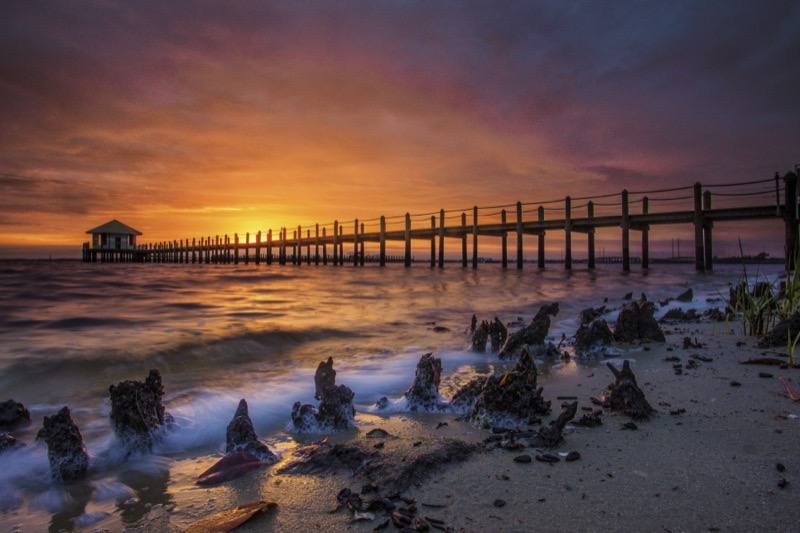
Recreation and visitors add to the mix. Charlotte Sports Park hosts spring training for the Tampa Bay Rays, and Sunseeker Resort on the harbor draws overnight guests. Bayshore Live Oak Park and Port Charlotte Beach Park give residents a place on the water.
Most of the customer base lives here year-round. Winter adds seasonal residents, but healthcare, home services, auto repair and retail stay steady through the summer.
Port Charlotte at a glance
Quick facts
- Population
- about 64,335 (Port Charlotte CDP)
- Government
- unincorporated, served by Charlotte County
- Median age
- about 55
- Median household income
- about $64,000
- Homeownership
- about 83 percent
- Major storms
- Charley (2004, Category 4) and Ian (2022, Category 4)
- Main corridor
- US-41, the Tamiami Trail
Landmarks and identity
Charlotte Harbor defines Port Charlotte's edge and much of its outdoor life. Along US-41, the Town Center mall and the Promenades anchor shopping near Murdock, where the Charlotte County administration center also sits. Charlotte Sports Park brings spring training baseball, and Sunseeker Resort overlooks the harbor. Bayshore Live Oak Park and Port Charlotte Beach Park are local favorites. The canal-and-grid neighborhoods from the community's early decades are still its most familiar landscape.
Kinds of businesses here
- Roofing, construction and storm repair
- HVAC, plumbing and electrical services
- Medical, dental and specialty practices
- Auto repair, tires and dealerships
- Charter fishing, marinas and boat repair
- Restaurants and family dining
- Real estate and property management
- Insurance and tax preparation offices
What a Port Charlotte business needs from a website
Port Charlotte customers are practical. They search for a service plus the town or neighborhood name, compare two or three options, and call the one that clearly explains what it does and where it works. After a storm, they also want to know who is open and taking calls. A six-page site gives them that without fuss. The home page states your trade and your part of town. The services page lists what you handle, in the words customers use. The areas-served page names Port Charlotte neighborhoods such as Murdock or Edgewater and nearby places like Punta Gorda, North Port and Englewood. The about page shows who stands behind the work, which matters to people who have hired contractors through two major hurricanes.
Start your website or read the full details on postcardadvantage.com.
Notes for Port Charlotte business owners
Be ready before hurricane season. Port Charlotte has lived through Charley and Ian, and customers now check websites first after a storm to see who is open. Keep a short status line on your home page that you can change from your own login, and make sure your phone number is current. Our post on Charlotte County recovery searches after Ian covers what people look for in those weeks.
Contractors should explain their work plainly. Rebuilding has been steady for years, and homeowners compare roofers, remodelers and pool builders carefully. List the jobs you take on and explain how estimates work. We wrote more about this in Port Charlotte's rebuilding boom.
Use the neighborhood names people know. Murdock, Edgewater and Charlotte Harbor each have their own pages here, and customers often search with those names. If you serve the whole community, say so, then name the parts you visit most.
Customers travel along US-41. Many people in Port Charlotte think of their shopping and services in terms of the Tamiami Trail. If your business is on or near it, mention a nearby landmark like the Town Center mall or the Promenades so people can place you.
Remember the neighbors. Port Charlotte borders Punta Gorda, North Port and Englewood, and many service businesses work across all of them. Put those places on your areas-served page only where you really go, and add any limits such as minimum job size or travel days.
Price sensitivity is real here. Customers appreciate businesses that state up front what a service involves and what affects the cost. Your services page can explain that without listing exact prices if you prefer not to.
Spanish-speaking customers are part of the community. If you or your staff speak Spanish, say so on the about or contact page. It is a simple, honest detail that helps people choose you. Neighboring North Port shares many of these same customers.
What you get for $499 a year
Tell us about your business and we write, build and host a complete website for it. You will never have to choose a template or install an update.
Six pages, written for you
Home, about, services, areas served, common questions and contact. Every page is written from what you tell us about your business, never filled with placeholder text.
A logo and images
Use your own logo and photos, or we make a clean logo and an image for every page. Either way the site looks finished the day it goes live.
Your own web address
The site runs on your own domain, with an email address to match: hello@ your domain, forwarded to the email you already use. If you need a domain, we can buy it for you: its price is shown on the order form and added to the yearly bill.
Hosting, security and backups
Fast hosting, a security certificate so browsers show the padlock, and backups, kept current all year without you having to think about it.
A login to change anything
Change a price, a phone number, a sentence or a photo yourself, whenever you like, from a simple login.
The legal pages
Terms, a privacy policy and an accessibility statement, so the site covers the basics a business website is expected to have.
Optional, paid separately: call tracking and an AI receptionist for your phone. See the phone extras.
Need more than six pages?
We also quote custom work. If your business needs more than the $499 six-page site, we build websites from $2,500 to $100,000, and almost anything is possible. Call (888) 348-1992 or email hello@suncoastlocal.com for a quote.
Three steps, and most of the work is ours.
-
Tell us about your business
One form about what you do and where you work. Add your services and prices if you want them shown, plus any photos or logo you have. Anything you leave out, we simply do not claim.
-
We build it
We write every page, design it, and set it up on your web address, 24 to 48 hours from payment.
-
It goes live, and we look after it
There is nothing for you to approve. Your site goes live as soon as it is built, and we email you the link. If you see anything you want changed, tell us and we change it. Then it runs all year and renews on its own, with reminders before every renewal.
Neighborhoods in Port Charlotte
Port Charlotte stretches from the harbor to the North Port line. These pages describe its main commercial and residential areas in more detail.
Questions from Port Charlotte business owners
If you work in both, yes. Many customers move between them without thinking about the line, and the Peace River bridges connect them in minutes. Your address shows where you are based, and your areas-served page can list Punta Gorda, North Port, Englewood and any other places you cover. Leave out any area you do not actually serve.
A short, dated note at the top of the home page saying if you are taking calls, what kinds of work you are handling first and how to reach you. People in Charlotte County remember who communicated after Charley and Ian. Because you have your own login, you can post that update from a phone as soon as you know your situation.
Often, yes. People use names like Murdock or Edgewater, or they mention a landmark such as the Town Center mall or the harbor. Naming the neighborhoods you serve on your areas-served page and mentioning nearby landmarks on your contact page helps both people and search engines understand exactly where you work.
If you do, yes. Port Charlotte has a larger Hispanic community than many nearby coastal towns, and customers who prefer Spanish look for businesses that can serve them comfortably. A line on your about or contact page is enough. We only include it if you tell us it is true for your business.
One flat price: $499 a year, with the writing, design, hosting, security certificate, backups and your login all included. There is no setup fee and no monthly bill. It renews automatically each year, and you can turn automatic renewal off at any time.
24 to 48 hours from payment. It goes live as soon as it is built, and we email you the link.
We do, from what you tell us on the order form. If you see anything you want changed once your site is live, tell us and we change it.
Yes. Tell us which domain on the form. We send you two settings to change, and your site goes live once they are changed. We also check that any email you already have on that domain keeps working.
Suncoast Local is a division of Postcard Advantage LLC. Your order, billing, website and support are all handled by Postcard Advantage, and you can reach us at (888) 348-1992.
Then we quote custom work. Beyond the $499 six-page site, we build websites from $2,500 to $100,000, and almost anything is possible. Call (888) 348-1992 or email hello@suncoastlocal.com with what you have in mind, and we will send you a quote.
Reading for local business owners
Port Charlotte's rebuilding boom: getting your contracting business found by people who need you now
Read the post
Lakewood Ranch doesn't want another chain - how local businesses signal authenticity to AI
Read the post
When 'Sarasota wedding photographer' searches pull up Tampa results - fixing the radius problem
Read the post